
My hockey story began in Pictou County, Nova Scotia, long before analytics, expected goals or Highlander Hockey Report entered the picture.
It began with my grandfather.
Grampy Baldwin introduced my older brother and me to hockey by registering us with Stellarton Minor Hockey. We started at the Mosquito level, moved to Paperweight the following year and eventually reached Pee Wee.
Our playing careers ended earlier than we would have liked. Organized hockey was expensive, and the financial realities of raising a family eventually meant we couldn’t continue.
Our love of the game did.
Saturday night became hockey night. When we were young, we were allowed to stay up for the first period — which was enough to make Hockey Night in Canada part of the rhythm of growing up.
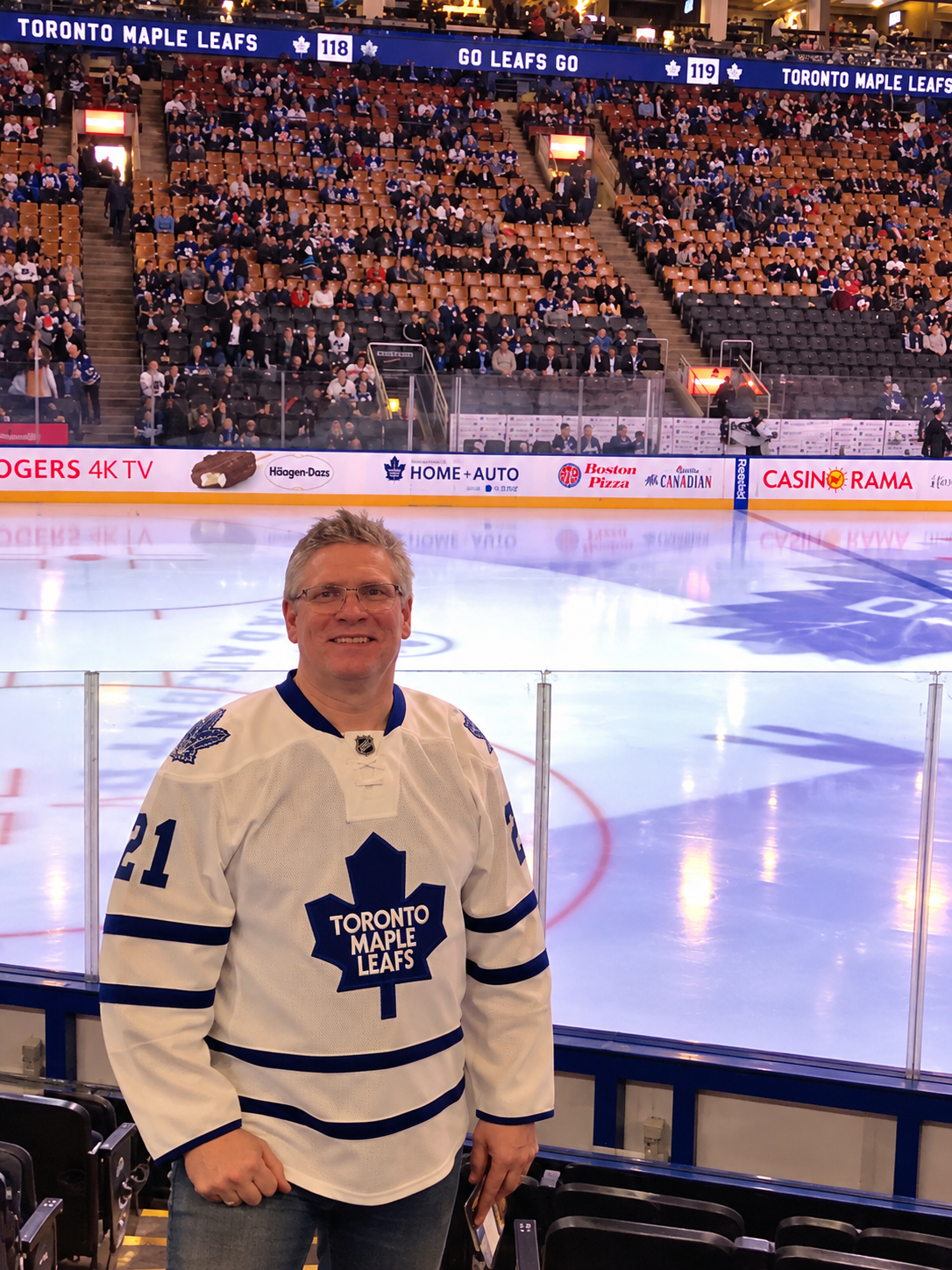
I became a Maple Leafs fan and Dave Keon was my guy. My older brother went in another direction, choosing Bobby Orr and the Boston Bruins.
Our youngest brother became a Montreal Canadiens fan.
We have tried not to hold it against him.
Hockey also arrived in small cardboard packages.
We collected O-Pee-Chee hockey cards, and Grampy helped feed that passion too. The 1971 Esso hockey collection became another connection to the players, teams and history of a game that was rapidly becoming part of our lives.
Growing up in Pictou County gave hockey another personal connection. Hometown NHLer Lowell MacDonald became the first NHL player I ever met.
Then came my first NHL game.
On February 19, 1984, I walked into Northlands Coliseum in Edmonton and watched the Oilers defeat the Pittsburgh Penguins 7–3.
For a hockey geek attending his first NHL game, the timing could have been considerably worse.
Wayne Gretzky, Mark Messier, Glenn Anderson and Paul Coffey each recorded three-point performances. I was watching one of hockey’s great teams approaching its first Stanley Cup championship — although, sitting in Northlands that night, I couldn’t have known what that spring would bring.
What I did know was that seeing NHL hockey in person only made me want more of it.
The Highlander Connection
My roots in hockey and my Highlander heritage both lead back to Pictou County.
The region is closely connected to the story of New Scotland and generations of Scottish settlement in Nova Scotia. My MacLeod heritage is part of that story.
The Highlander connection also runs through my family. My other grandfather – Major Douglas Charles MacLeod - served with the Nova Scotia Highlanders, the historic infantry regiment with deep roots in northern Nova Scotia.
So when it came time to give this hockey project an identity, Highlander wasn’t something invented for a brand.
It was already there.
The MacLeod motto Hold Fast seemed equally appropriate.
Over a lifetime of following hockey, I’ve become increasingly interested not simply in what happened, but why. Why does a player thrive in one situation and struggle in another? Why does a roster that looks good on paper fail? Why do some prospects develop while others stall? Why does the accepted narrative around a player or team sometimes survive even when the evidence begins pointing somewhere else?
Modern analytics provide new ways of exploring those questions. But numbers are most useful when combined with observation, history and context.
That curiosity eventually became Highlander Hockey Report.
I’m still a Leafs fan. I’m still a collector. I still love hockey history. I still enjoy walking into an arena I’ve never visited before.
And I’m still a hockey geek.
The difference is that now I have somewhere to write about it.
Highlander Hockey Report is where I can examine the numbers, question the narrative, explore the league, tell some hockey stories and offer my perspective.
You may agree with it.
You may disagree with it.
Either is fine.
The goal isn’t to win an argument. It’s to start a better conversation.
Hold Fast.